Posts

Showing posts with the label Film review

Hyper reality - Perspectives

Image
This week’s lecture was on Hyper reality. Research Simulacra and simulation - Jean Baudrillard David Boyle - Authenticity Definitions Pornification  - the increasing occurrence and acceptance of sexual themes and explicit imagery in popular or mainstream culture (3rd Order) Hyper realism  - particularly highly realistic, to the point of being more real than real Simulation - imitation of a situation or process Simulacra  - an image or representation of someone or something Fake news  - false stories that appear on the news, internet or in other media, usually to influence politics or opinions Simulacra and Simulation is a philosophical treatise by Jean Baudrillard Human experience - simulation of reality rather than reality itself An individual in a postmodern world is an entity influenced by media, technological experience, and the hyper real “We live, not inside reality, but inside our representations of it.” Hyper reality makes co...
Ouroborus - Perspectives

Image
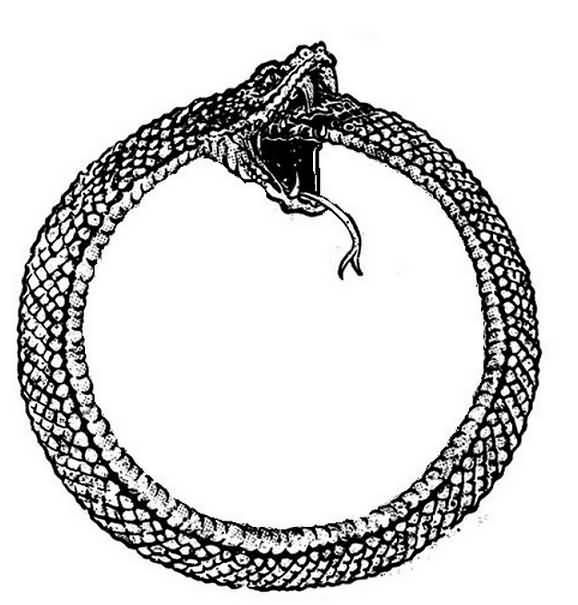
This week’s lecture was on Ouroborus or story loops. Definitions Ouroborus - a circular symbol of a snake or dragon devouring its own tail, standing for infinity Meta  - talks about its own category Metafiction - fiction about fiction Metanarratives  - philosophies mentioned before Metafiction - fiction which is self-consciously reflects upon its own nature, modes of production etc. Mise en abyme  - “placing into infinity” or “placing into the abyss” Intertextuality - the shaping of a text’s meaning by another text The 4th wall - a performance convention in which an invisible, imagined wall separates actors from the audience. While the audience can see through this “wall”, the actors act as if they cannot.  Metafiction was coined in 1970 as experimental texts that broke with the tradition of literary realism Mise en abyme is commonly used to describe standing between two mirrors to create infinite images. It is used in deconstruction to describe...

The Derrida Virus - Perspectives

Image
Todays lecture was on a theory called the Derrida virus. Research Jaques Derrida - philosopher Nikos A Salingaros- The Derrida Virus, 2003 Christopher Butler - Postmodernism: A very short introduction Judith Butler - Gender is performative Definitions Ideology  - a systematic body of concepts especially about human life or culture Binary Opinions - one thing OR another (eg. M/F, X/Y, Straight/Gay, White/Black Normativity - phenomenon in human societies of designating some actions or outcomes as good or desirable or permissible, and others as bad or undesirable or impermissible Binary Opposition - A pair of mutually-exclusive signifiers in a paradigm set representing categories which are logically opposed and which together define a complete universe of discourse.  Deconstruction  - a method of critical analysis of philosophical and literary language which emphasises the internal workings of language and conceptual systems, the relational quality o...

Broke back mountain and the death of the author - Perspectives

Image
This lecture was based around the debate of who owns a piece of work that has been released to the public. Publications to research Roland Barthes Cassette boy - youtuber - chops together politicians and news segments. Definitions The Canon - cultural products generally accepted as ‘superior’ or more significant than other examples in the same field.  DWEMs - Dead White European Males - unfairly dominate the “high” arts - “male, pale and stale” Sweding - recreation of feature films on a low budget - obsurdety Authors and critics give fixed meanings and ideas Audience tells culture what it means by imprinting and do-creating the work. “The Birth of the Reader must be at the cost of the death of the Author” Opens popular participation and democratic determinations of cultural value.  Consumers recombine new materials created by author CGI reproductions of celebrities - death of Author of self. Clauses in Wills about not being able to use likenes...

Mad Max as an exploitation film - film review

Image
Exploitation films have been around since the beginning of film itself. Originally these films would have been presented in Circus tents, and would pick up on morality tales to get audiences out and make them feel better about their lives. The banning of film companies owning cinemas really marked the turn around for exploitation films. Exploitation met A list films to create entirely new genres and opportunities. Mad Max (1979) for many was a highly influential and game changing film. In keeping with it’s B movie roots, the film was directed by George Miller. He was not a qualified, or highly experienced filmmaker, but rather a medical doctor and a short-film experimenter. He made the film using highly experimental and groundbreaking methods. The film also arrived in the middle of a massive period of change for Australian filmmaking. R rated films had only been introduced to the country in 1970, so many of the national filmmakers were beginning to explore what this meant for film...

The Five Act Structure of the Greatest Showman - Film Review

Image
Three and five act structures are key devices used in effective storytelling. They give narratives and stories a pleasing base structure upon which the weave the elements to create a unique viewpoint. The Greatest Showman has a clear five act structure used beneath all the songs and showy costumes to make it stand up as a narrative. Act 1 - Childhood We see the challenges that Barnum went through as a child. It shows him as a poor tailor’s son struggling to make ends meet. It shows him meeting Charity for the first time. It also shows his father getting ill and eventually passing away, and how he had to beg on the streets for food. Towards the end of the act we see Barnum heading off to make his fortune on the railways.  Act 2 - Attempt One We see Barnum come back a wealthy man to marry Charity. They build a home together and have two daughters. Barnum is working at a trading company, but they all get fired when the company’s flotilla sink. Barnum uses the bonds fo...

Opposing storytelling in Kingsmen:Secret service - film review

Image
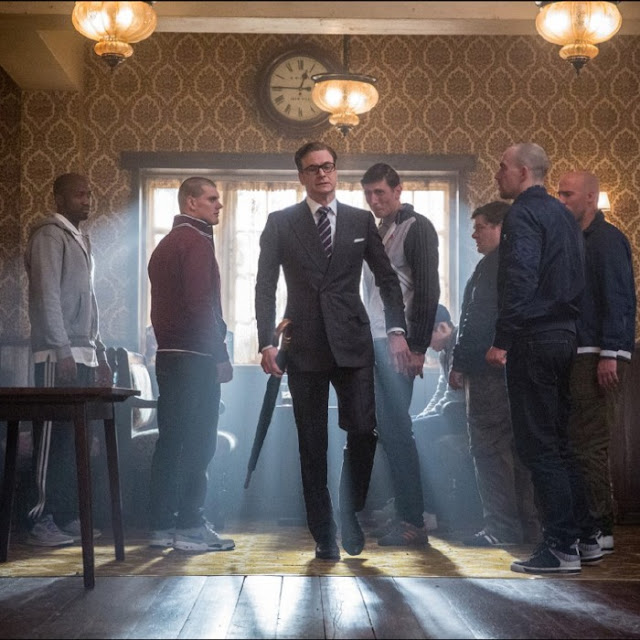
One of the key storytelling method used by filmmakers is characters with opposite opinions and backgrounds. This is often the Hero and Villain. The two characters I have chosen to look at from this film are Eggsy, the protagonist, and Valentine, the protagonist.  Personal history Eggsy Empoverished background, abusive stepfather, father was an agent (this is unknown initially, once known, living up to memory) Valentine Wealthy, self-made billionaire, speech impediment, philanthropist, can’t stand blood. Personal World View Eggsy World is unfair, there is nothing to aim for, learns about himself through adversity. Valentine Humans are ruining everything, money cannot be the answer, some humans are useless, humans are like a virus, nobody is helping, fear of violence. Inherited World Eggsy Gang fights, chavvy, estate Valentine No money is too much, his way or the high way.  Wants (goals) Eggsy To prove himself, to remove his mum...

Hero’s journey in the Secret of Moonacre - film review

Image
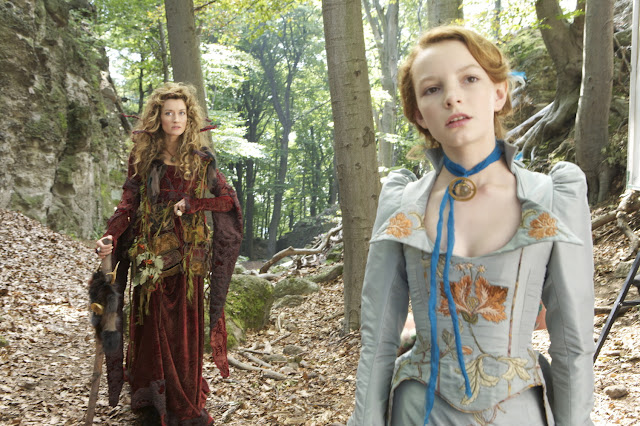
The hero’s journey (or Monomyth) is a narrative characteristic commonly found in almost every movie. This is the cycle that the lead goes through to create a complete and satisfying narrative. I will use the movie “The Secret of Moonacre” to demonstrate this. This is a film I have loved for a long time, largely because of its enchanting storyline and the magic woven through it. The journey normally begins in the Ordinary World for the character. In “The Secret of Moonacre” this establishes Maria in the luxury of affluent Victorian styled London (although the exact placing is debatable as the costumes and architecture is not accurate to the period.) Maria’s life seems good and happy living with her father and governess until her father suddenly passes away. This means she will have to move in with her Uncle, Sir Benjamin. The second element of the hero’s journey is the call to adventure. In the movie this happens when Maria is given a large ancient book from her father’s will. I...

Non-linear storytelling in Deadpool - Film Review

Image
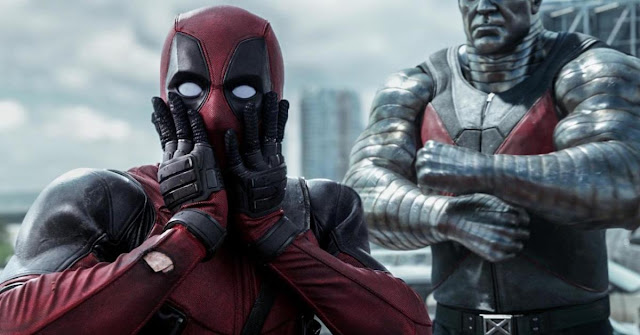
Non-linear story telling is another key device used by Postmodernist films. Deadpool uses this technique perfectly to capture Deadpool’s personality as a character and make his origin story much more interesting. It is perfectly entwined through the scrip to create an amusing and upbeat film. The first, and immediately most obvious to audience, device used is fourth wall breaks. These are direct comments or interactions with the audience. The use of fourth wall breaks begins right from the beginning of the credits, labelling each of the production team with different funny names other than their role names. He also regularly turns to the camera and tells the audience exactly what he’s feeling. This openness helps us connect with the character, makes us slightly disgusted at times and ultimately leads to some amazing comedic moments. This gives us an idea of the character of the film and Deadpool himself before the movie starts. The film also begins in the middle of the sec...

Archetypes in the Wizard of Oz

Image
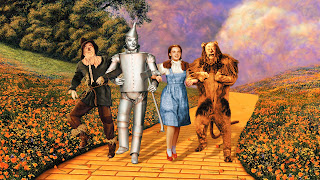
Archetypes is another way to analyse the content of films in terms of screenplay. I decided to examine theWizard of Oz and look at how each archetype is presented within the film. The Hero - Protagonist  Dorothy  as it is her “dream”. The whole world she falls into is based around her and the journey she must take. The Herald  - to warn and challenge The Tournado  as it takes Dorothy from the real world into the dreamworld, displacing her and setting her new challenges. It ultimately puts her in the position for her who adventure. The Mentor - to guide and motivate Galinda the Good Witch as she sets Dorothy on the path to self-discovery (literally the Yellow Brick Road). She also gives her the item that will ultimately cause her success and sends her aids.  Threshold guardian - tests hero at the threshold The  Oz gate Guardian literally decides whether or not Dorothy will be allowed in to see the Wizard. His whim ultimately decide...

The Apple, Auschwitz and the Incredulous Frenchman - Perspectives

Image
Today we were looking at how multiple things can come together to form new, greater and more complicated works.  Publications to research Roots of modernism by Christopher L.C.E. Witcombe The European Enlightenment - the scientific revolution by Richard Hooker - www.wsu.edu/~dee/ENLIGHT  Memories of my Life (1908) by Francis Galton The Condition of Postmodernity by David Harvey Key Ideas Meta-narratives  - large-scale theories and philosophies of the world (eg. religion, science, history and art) Teleology - describes the inevitable 'coming-to-be' of something - guarantee of progression towards development or definitive form. Religion - because of its emphasis on transcendence Art - perceived evolution from art movement to art movement and associated notion of the 'avant-garde' Science - discoveries are seen as unlocking the secrets of existence and revealing it finally History -  perceived progression from epoch to epoch, with each ag...

Reflections on Transparency - Perspectives

Image
Today's lecture was furthering the investigation into the development and understanding of postmodernism and what this meant to the establishment. Publications to research Introducing Postmodernism (1995) by Richard Appiganesi and Chris Garret Ornament and Crime (1908) by Alfred Loos Claude Levi-Strauss (1908-2009) Key Ideas of Postmodernism Ahistorical - lacking historical perspective or context Irreducible - not be able to be reduced or simplified Objective -  not influenced by personal feelings or opinions, in considering or representing ideas Transparent -  easy to understand, perceive or detect; allowing light to pass through so that objects/layers behind can be clearly seen Universal -  communicates effectively to everyone despite culture, age or location Definitive -  for general use and typically of standard design, not special or commemorative. A certain statement or piece.  Fixed -  predetermined and not able to be c...

"Postmodernism is difficult" - Perspectives

Image
Today was our first perspectives lecture with Phil. Below are my notes from the lecture. Post modernism is a mood rather than a discipline which attempts to find new and more truthful versions of the world. Publications to research Federic Jameson - "The Cultural Turn" Stuart Sim - "The Routledge Companion to Postmodernism" Dick Hebdige - "Hiding in the light" "Postmodernism for Beginners" Marshall Bearman - "All that is solid melts into the air" http://www.academia.edu/4863266/The_ironic_response_to_nostalgia_in_the_postmodern_condition Key ideas of Postmodernism Skeptical - the idea that clear knowledge of what Postmodernism is is impossible Relative - the idea that one's experience and representation of postmodernism depends on the individual's own experiences, culture and history.  Disputed - the idea that there are many different ways that postmodernism can be interpreted and presented, and tha...

Psycho film review

Image
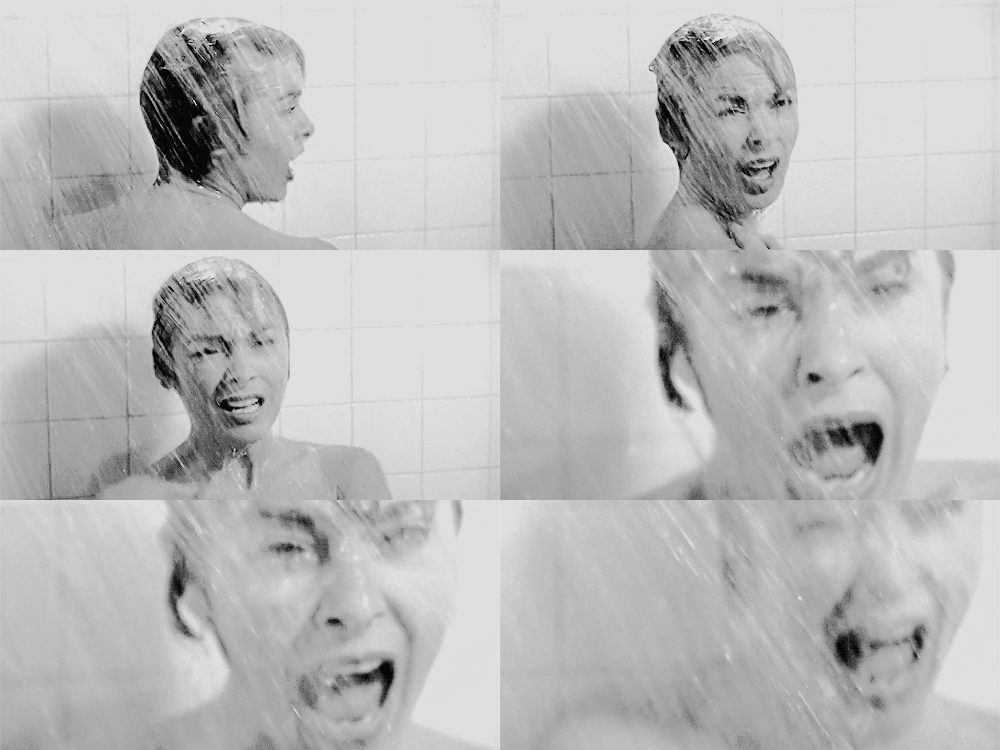
Psycho is another of Hitchcock's highly renown films that helped to shape the direction that both horror films and movies in general moved. The film set a new level of acceptance of both sexual and violent behaviour. It is influential enough for the US library of congress to select it for preservation in the National Film Registry due to it's culturally, historically or aesthetically significant content. Figure. 1 Shower (1960) As with others of Hitchcock's films, Pyscho is based on a novel by Robert Bloch. (Fig. 2) The novel itself is based on a real life American murderer called Ed Gein who was prevalent in the 1950s."When Robert Bloch's novel was published in 1959, Hitchcock bought all copies to keep the plot twists under wraps. Similarly, studio execs and theatre owners were given no detail about the film." Gray (2017) Figure 2. Psycho cover (1959) Paramount reluctantly agreed to a small budget for the film without asking any questions. ...

Rope film review

Image
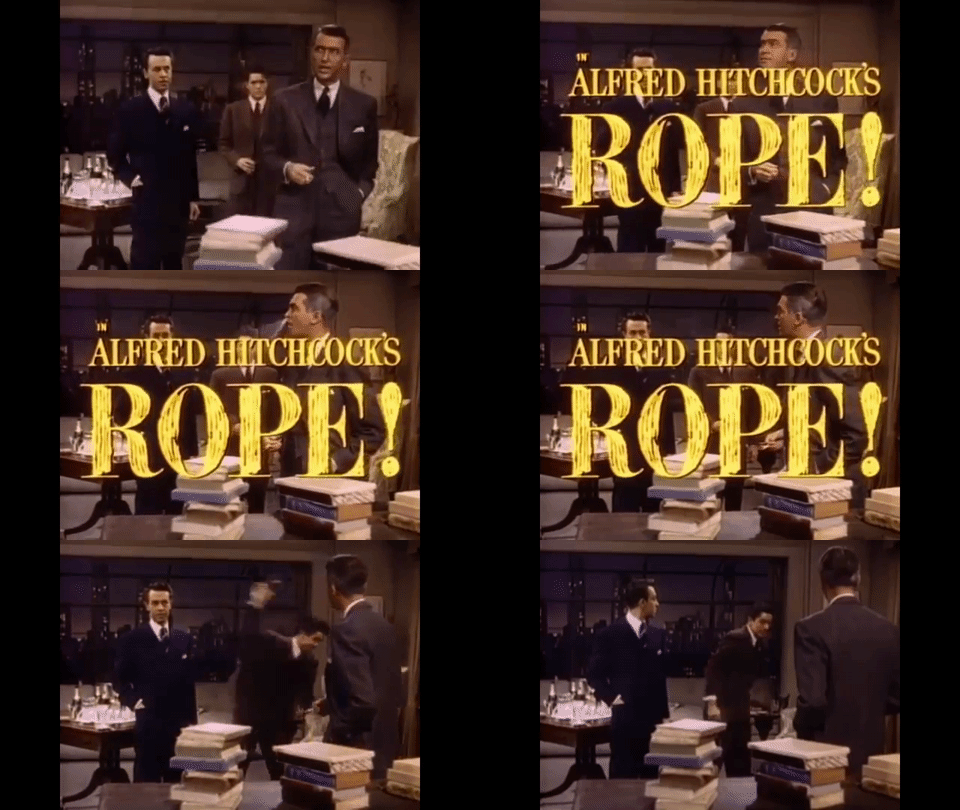
Alfred Hitchcock's 1948 film Rope is a highly experimental piece of film, based around the 1929 play by Patrick Hamilton. "The play appealed to Hitchcock's sense of the macabre and his fascination with situations involving the inconvenience of dead bodies." Ebert (1984) Fig. 1 Rope (1984) What stands out about this film is not its story line, that is one that has been used in many other narratives and ultimately did not belong to Hitchcock, but rather the incredibly groundbreaking methods he deployed in the film's production. "Hitchcock was interested in seeing whether he could find a cinematic equivalent to the play, which takes place in the actual length of time of the story." Canby (1984).  This was a highly experimental film, and even Hitchcock declared the film a failure, and refused to let it be released for a number of years. Hitchcock used 10 mins reels of film to film continuous shots; moving between the actors and starting and finishing...

Edward Scissorhands Review

Image
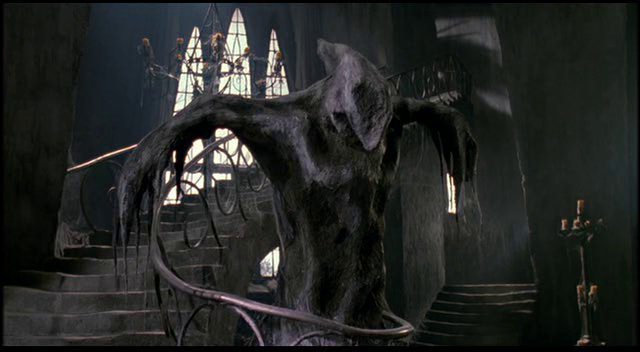
Edward Scissorhands is one of the most loved Tim Burton films. Johnny Depp as Scissorhands himself plays a lost, lonely, disenfranchised, childlike young man who is left as a partially completed experiment, with scissors in place of hands. "Edward Scissorhands certainly has its flaws, dwelling too long on Edward's talent for scissor work and leaving a number of characters too thinly sketched for comfort." Berry (2000). The aesthetic of Edward Scissorhands is very reminiscent of German Expressionism, a style that director Tim Burton appears to be highly partial to, with it being used in other films such as Frankenwenie and Vincent. The subject matter of the film is also closely linked to the themes of Expressionism; with a mad professor character, an experiment or machine gone wrong and a distressed damsel. All of these tropes are clearly and cleanly present in the creation of Edward Scissorhands. The interior design for the film also carries many of the characteristics ...

King Kong Film Review

Image
The original King Kong movie is a massively influential film, not just for building a massive film franchise that spans 8 movies currently released, 4 spin-off movies and another couple of movies on the horizon, but also because it shows the beginning of very large-scale production using stop motion integrated into the large amount of action. King Kong once again encompasses the common theme of an evil monster and a damsel in distress. The blonde lead female, played by Fay Wray is a beautiful woman struggling in the wall street crash, who agrees to go on an undescribed journey with a man she has never met. She is incredibly annoying throughout the rest of the film, being a pathetic stereotype of a woman. “It’s a 96-minute screaming session for her, too much for any actress and audience. With the blonde still screaming while in Kong’s palm atop the Empire state, after having screamed all the way from the first reel, another unbelievable fact is that Kong shouldn’t drop her and look...

Metropolis Film Review

Image
The 1927 film Metropolis is the quintessential expressionist Sci-Fi film. Complete with a maiden in distress, a mad professor and an insane robot on the loose, this film set the trope for many films that would come. As stated by Roger Ebert; Metropolis does what many great films do, creating a time, place and characters so striking that they become part of our arsenal of images for imagining the world. Lang filmed for nearly a year, driven by obsession, often cruel to his colleagues, a perfectionist madman, and the result is one of those films without which many others cannot be fully appreciated The director, Fritz Lang (who also directed another trail blazing movie, The Cabinet of Dr Caligari ), uses several innovative techniques to create this timeless and hugely influential film; including be the first film to use a true mix of camera angles and shots. Previous films such as Dr Caligari had only used a static camera, with actors and actresses waling in front of the camera...